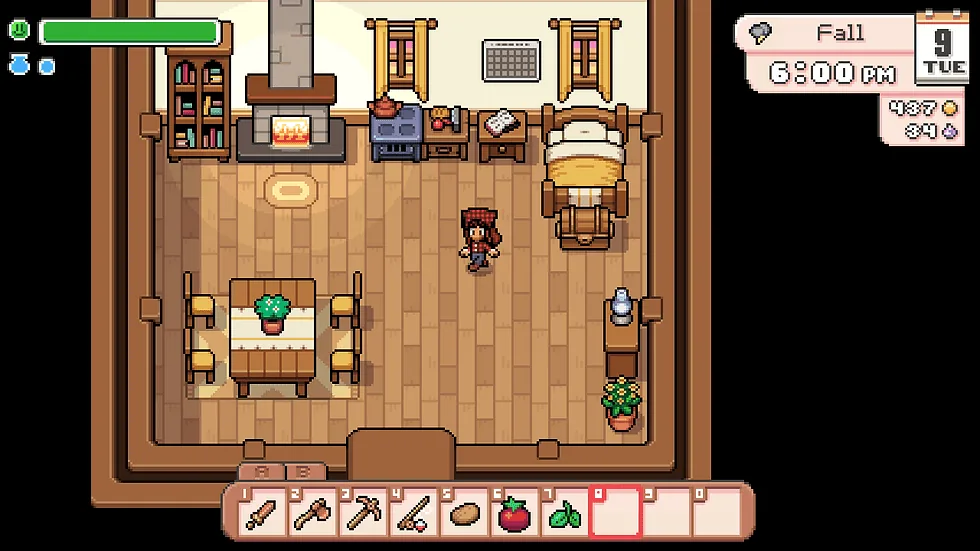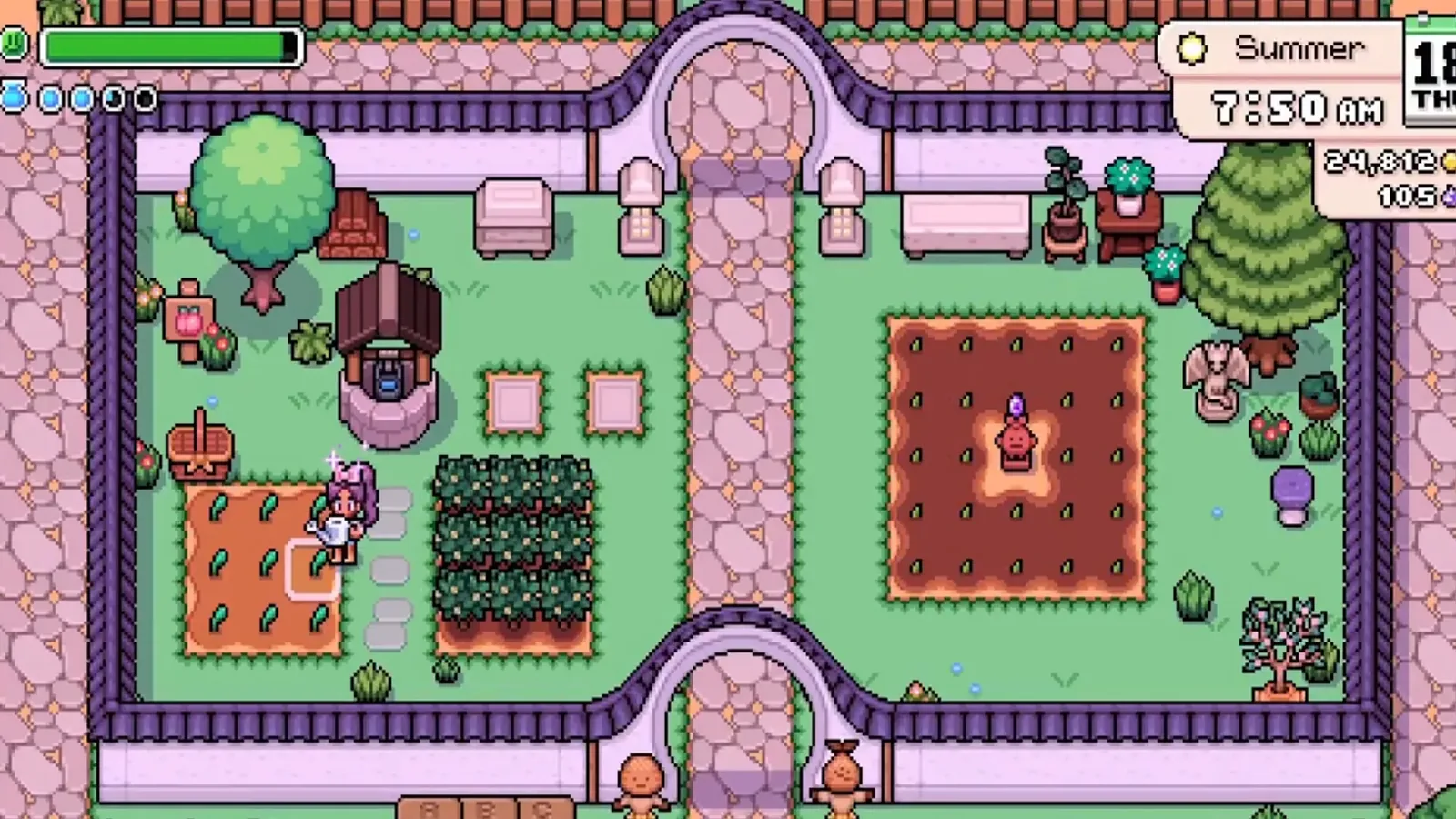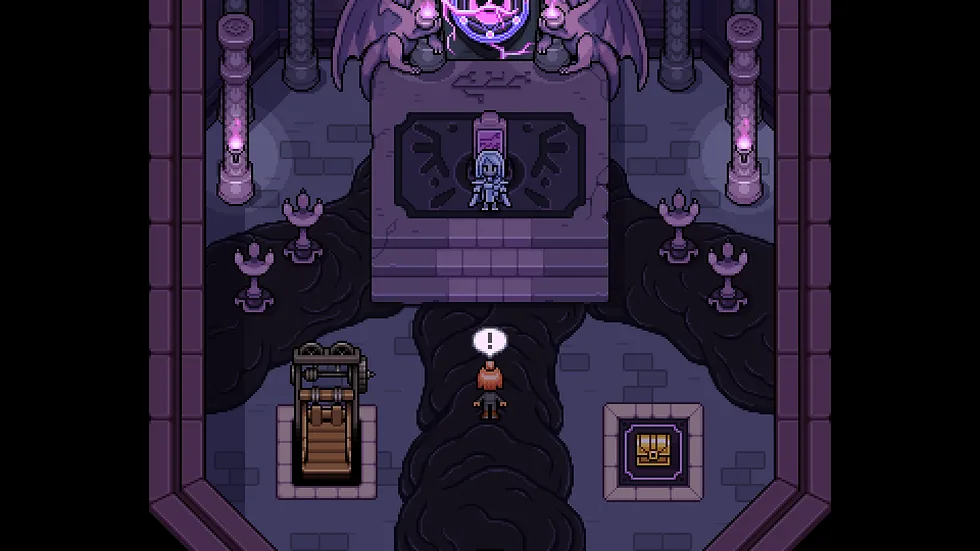
The best Fields of Mistria tips are about choosing a small priority for each in-game day instead of trying to finish every activity at once. Start by tending crops, then use the rest of your time for one focused job: fishing, mining, gathering, crafting, or meeting villagers. The game’s central loop is farming, fishing, mining, and crafting your way toward a revitalized town, with seasonal resources, museum collections, requests, relationships, and magic giving you longer-term goals.
For related guidance, see Fields of Mistria Price and Fields of Mistria Recipes.
Build a simple daily routine
You do not need a perfect schedule at the beginning. Use this repeatable order:
- Check your crops and handle the farm jobs that cannot wait.
- Look at the request board before leaving town, so you know whether something you collect can serve two purposes.
- Pick one main activity for the day. Go fishing if you need food or collection progress, mine when you need ore, or gather and cut wood when you want materials for crafting.
- Talk to villagers you pass naturally, then return with enough time to store useful items and prepare for tomorrow.
This approach keeps your inventory and stamina focused. It also fits the game’s seasonal design: weather, crops, forage, fish, and insects change across four seasons, so a missed item may be worth watching for later rather than chasing it inefficiently today.
Keep one of every new collection item
Treat the first unfamiliar fish, insect, forageable, crop, or archaeological find as a possible museum item. The Steam store describes more than 50 museum sets spanning fishing, bug catching, farming, mining, and archaeology. That makes collection progress a practical reason to explore different skills, not a task you need to postpone until the end of the game.
| When you find… | Beginner action | Why it helps |
|---|---|---|
| A new fish or insect | Keep the first one aside | It may fill a museum collection and teaches you which activity produces it |
| A new forageable | Store one before selling extras | Seasonal forage changes, so a spare can save a later trip |
| A crop you have not grown | Reserve one harvest | Farming contributes to both income and collection progress |
| Ore, gems, or archaeology finds | Keep a small reserve | Mining and archaeology support the museum as well as equipment and crafting |
Sell duplicates only after you have checked requests, recipes, crafting needs, and museum progress. This rule is deliberately conservative: it costs a little storage space, but it prevents the common beginner mistake of selling a rare first find and then having to wait for the next season or expedition.
Spend your first progress broadly
Fields of Mistria has several substantial systems rather than one mandatory route. The store page lists farming, animals, crafting, cooking, blacksmithing, exploration, combat, romance, and magic alongside the core farm loop. Early on, sample each system long enough to learn what it gives you, then invest more time in the two or three that match your current goal.
Use this decision rule:
- Need materials or stronger equipment? Prioritize mining, gathering, and blacksmithing.
- Need a dependable supply of useful items? Prioritize farming, fishing, cooking, or animals.
- Want broader town progress? Mix requests with museum donations and ordinary farm work.
- Want relationship progress? Speak to villagers during your normal routes instead of abandoning every other objective.
There is no need to rush toward one “correct” build. A broad first season gives you information about the map, resources, and systems; specialization becomes easier once you know what you enjoy and what your current quest or upgrade requires.
Prepare before making the Mines a main goal
The Mines are best treated as a planned expedition, not a place to enter with an empty stomach and every inventory slot full of unrelated items. NPC Studio’s preparation guidance recommends three concrete milestones for deeper mining: reach floor 80, equip gold armor and tools, and bring plenty of food and syrups to maintain health and stamina. These are later targets, so a new player should build toward them rather than feel pressured to meet them immediately.
Before a mining day, use this checklist:
- Empty enough inventory space for ore, gems, finds, and drops.
- Bring food and syrups for health and stamina.
- Upgrade tools and armor when your materials allow it.
- Decide whether the day is for reaching a new floor, collecting resources, or looking for museum items.
- Leave room for the return trip and storage afterward.
The official 1.0 notes also say that Mines treasure-chest drop rates were improved. That makes a prepared run more worthwhile, but it does not remove the need to choose a clear objective. If you are low on supplies, return to farming, fishing, or gathering and make the next expedition stronger.
Use relationships as a long-term progression track
Villagers are not just background decoration. The game’s systems include relationship progression, and the 1.0 update raised the NPC heart cap to 10, adding proposal, wedding, and marriage events. For a beginner, the useful habit is simple: talk to people when your route already passes them, remember the names of villagers connected to current quests, and give gifts only when you understand what you can replace.
Do not turn every day into a gift-delivery circuit. Keep relationship building alongside your normal town, farm, and gathering routes. Later, if you want to focus on Mines progression, NPC Studio specifically recommends reaching 8 Hearts with Juniper and Eiland, whether you choose the Best Friends or Romance route.
Set milestones instead of trying to do everything
Good early milestones are easier to manage than a giant completion list:
- Establish a crop-and-storage routine.
- Try each major activity at least once.
- Keep first finds for museum and request checks.
- Build a reserve of food, materials, and upgrade resources.
- Push the Mines when your supplies and equipment support it.
- Let relationships, museum sets, and town repairs grow alongside the farm.
The 1.0 update confirms that the Town Repair Questline and Museum can ultimately be completed, so your daily choices feed into meaningful long-term goals. Take the next useful action, keep irreplaceable first finds, and let the seasons tell you what to pursue next.