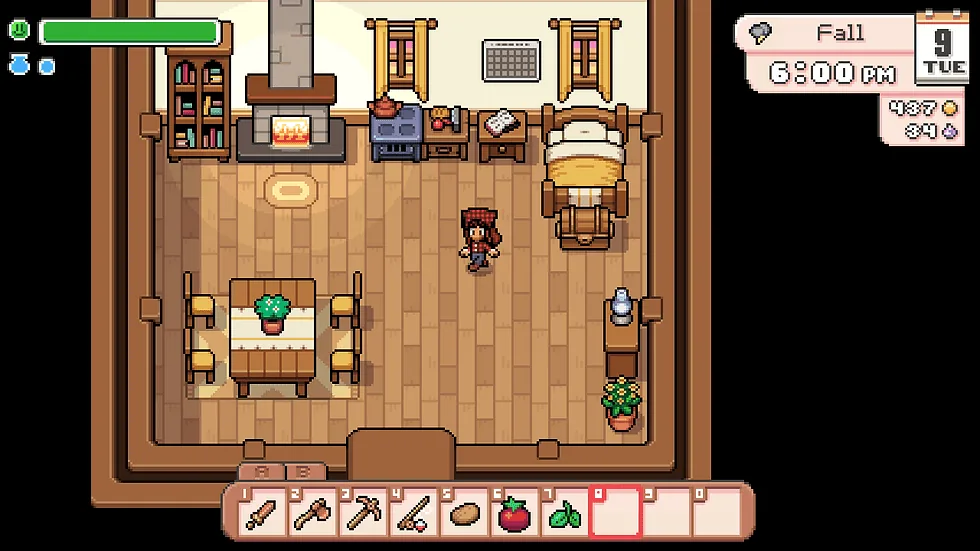
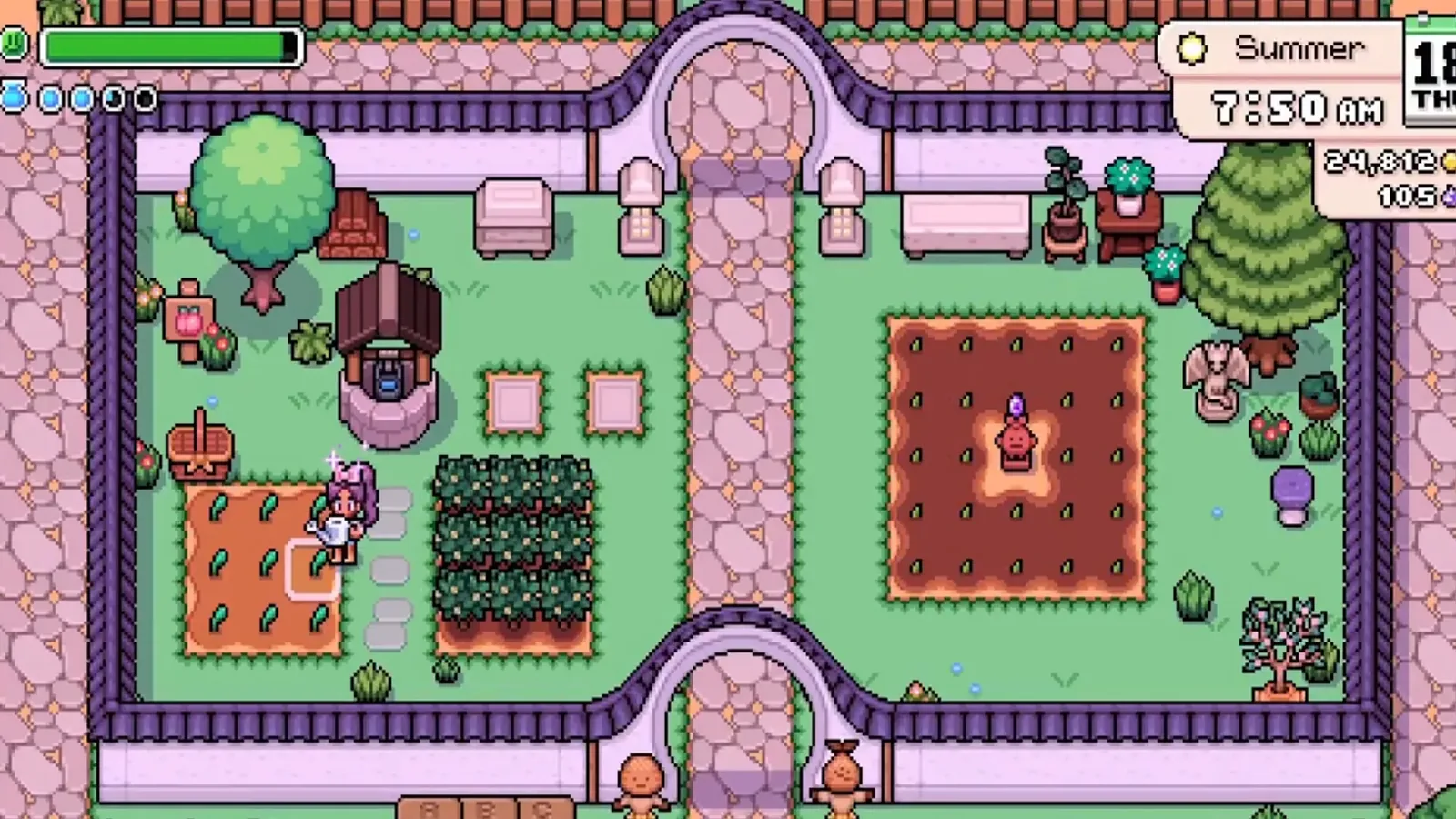
Terrariums turn spare insects into one of the most useful collection tools in Fields of Mistria. They were added in the Fourth Major Update and remain especially valuable in version 1.0 because Fish Bait and Bug Pheromones can target a specific rarity of fish or bug. That makes the system much more than farm decoration: it is a practical way to attack stubborn gaps in the Museum instead of waiting for random spawns.
The short version is simple. Unlock the Terrarium through its Ruby Town Rank quest, place four non-Bee insects of the same rarity inside, wait for the machine to request a crop or forageable, provide that requested item, and collect either Fish Bait or Bug Pheromones matching the insects' rarity. The normal result is split between those two product types, while a correctly stocked legendary setup has a special rule discussed below.
If you are still working through town progression, start with our Town Rank and Renown guide. For the collection side of the system, keep the Museum completion guide open as a checklist. The companion Apiary and Honey Guide handles Bees instead of other insects.
How to unlock the Terrarium
Terrariums are not an early-game crafting station. The system becomes available through a related quest that unlocks at Ruby Town Rank. This is the same broad progression stage in which the game begins introducing more specialized farm and collection systems.
Once the unlock quest is complete, you can craft and place Terrariums on your farm. Do not confuse them with Apiaries. The two systems arrived in the same major update and use a similar request loop, but they process different creatures and produce different rewards.
- Apiary: accepts Bees and produces Honey products.
- Terrarium: accepts non-Bee insects and produces Fish Bait or Bug Pheromones.
For Honey production, use our Apiary and Honey guide.
How Terrariums work
A Terrarium needs four insects of the same rarity. Bees are excluded because Bees belong to the Apiary system. After the Terrarium has been stocked, wait three days. It will then display a request for a crop or forageable item.
Give it the requested item and the Terrarium can produce a rarity-matched collection consumable. In normal cases, a correctly stocked Terrarium has an even chance to produce Fish Bait or Bug Pheromones. The important part is that the rarity comes from the insects you placed inside.
For example, four rare non-Bee insects create a rare-tier production cycle. The resulting Rare Fish Bait can be used to summon a rare fish, while Rare Bug Pheromones can be used to summon a rare bug. You therefore do not need to sacrifice the exact creature you are trying to find. You need four spare insects in the appropriate rarity tier.
A useful farm routine is to keep common insects for low-tier requests and reserve duplicate uncommon, rare, and legendary catches for Terrarium production rather than immediately selling everything.
Fish Bait explained
Fish Bait summons a fish whose rarity corresponds to the bait. Use it while facing open water to generate an appropriate fish shadow. Fish Bait can also be placed into the fish trap at the Beach.
This is particularly useful when your Museum checklist says you are missing a rare fish but normal fishing keeps producing the wrong shadow sizes or rarity. Instead of repeatedly leaving and re-entering an area hoping for favorable random spawns, produce the relevant bait tier and use it at a location where the target fish can appear.
The bait does not erase the target fish's other requirements. Location, season, weather, water type, time, progression, and other species-specific conditions can still matter. Think of bait as a way to control rarity, not as a universal item that ignores the Almanac's rules. Use the Calendar Guide for seasonal timing and the Map Guide to identify the correct region before spending a valuable bait.
Fish Bait was improved shortly after the Terrarium system launched: patch v0.15.2 made Bait and Pheromones work in the Mines and summon the expected rarity there. That is useful for players cleaning up Mine-specific collections while progressing through the later biomes.
If you have not completed the Mines yet, see How to unlock the Mines and our Floor 90 puzzle solution for late-game progression.
Bug Pheromones explained
Bug Pheromones perform the same basic job for insects. Use a pheromone on open ground and it summons a bug of the corresponding rarity. This is one of the strongest uses of Terrariums because rare insects can otherwise be frustrating to hunt when their normal spawn conditions are narrow.
The loop can also become self-reinforcing. Suppose you already have four spare rare bugs. Put them into a Terrarium, complete its request, and if you receive Rare Bug Pheromones you can use those pheromones while hunting additional rare insects. Those catches can fill Museum slots or eventually feed later Terrarium cycles.
Common, uncommon, and rare pheromone tiers are also relevant to requests, so keeping some consumables in storage is sensible even after you have finished the corresponding Museum section.
Legendary Terrarium production is different
Legendary production has an important exception. A correctly stocked Terrarium containing valid legendary insects produces Legendary Bug Pheromones rather than following the normal 50/50 Fish Bait versus Pheromones result.
Bees remain excluded. Current Terrarium data identifies valid legendary insects such as the Biggest Beetle, Flower Crown Beetle, Snowball Beetle, Speedy Snail, and Strobe Firefly for legendary pheromone production.
Because legendary insects are much harder to replace than common bugs, do not automatically load your first copy into a Terrarium. Donate the first Museum copy when appropriate, then use duplicates for production. This follows the same first-copy rule we recommend throughout our Museum guide.
Terrarium requests and season changes
The three-day waiting period is only the first half of the production cycle. When the Terrarium is ready, it asks for a crop or forageable. You must provide that item before receiving the final product.
Patch v0.15.2 also changed Apiaries and Terrariums so their requested item updates when the season changes. This prevents a machine from remaining stuck indefinitely on a seasonal request that has just become impractical to obtain.
Even so, maintaining a small storage chest of seasonal crops and forageables makes the system much smoother. Do not ship every last copy of a seasonal item if you plan to run several Terrariums continuously.
Our Crops guide covers crop planning, while the Calendar guide is useful when deciding how much time remains before a season ends.
Best Terrarium strategy for Museum completion
The most efficient way to use Terrariums is to work backward from your missing Museum entries rather than producing random bait.
First, inspect the Fish and Insects wings and identify what is actually missing. Then check the target's rarity and spawn conditions. If the missing entry is rare, stock four duplicate rare non-Bee insects and begin producing rare-tier consumables. Save Fish Bait for the correct fishing location and use Bug Pheromones where the desired insect can legitimately spawn.
Version 1.0 also added the Terrarium Treasures Set to the Museum. Several pheromone items are explicitly donatable and now belong to the Terrarium collection, so do not consume every first copy without checking your Museum status.
A good completion workflow is:
- Donate first copies of new bugs and fish.
- Save duplicate insects by rarity.
- Keep four matching-rarity non-Bee insects for each planned Terrarium cycle.
- Stock spare seasonal crops and forageables for requests.
- Donate the first required Terrarium products for the Terrarium Treasures Set.
- Use duplicate Fish Bait and Bug Pheromones to target missing Fish and Insect entries.
- Repeat the process at higher rarity tiers only when your checklist requires it.
This approach minimizes wasted rare catches and gives every Terrarium cycle a purpose.
Building a collection-focused farm
Terrariums work best as part of a broader farm loop rather than as an isolated machine. Grow a manageable crop field, keep a chest of seasonal request items, run Apiaries beside the Terrariums, and use ranch products for cooking or other goals. The Crops Guide and Animals Guide cover those two sides of farm management.
As the farm grows, Water Sprite Statues can reduce watering pressure so you have time to fish, hunt bugs, and visit the Museum. This is the real value of linking the systems together: farming supplies processors, processors target missing collectibles, and those collectibles complete Museum sets instead of every mechanic competing for a separate day.
Common Terrarium problems
The Terrarium will not accept my insects
Check that you have four insects of the same rarity and that you are not trying to use Bees. Bees belong in Apiaries.
I waited three days but did not receive bait
The Terrarium first asks for a crop or forageable. Fulfill that request before expecting the product. Normal production can also give Bug Pheromones instead of Fish Bait.
My bait or pheromones do not summon the exact species I want
They target rarity, not an exact species. You still need to use them in a location and under conditions compatible with the creature you want.
Can Fish Bait and Bug Pheromones be used in the Mines?
Yes. Patch v0.15.2 specifically updated both item types to work in the Mines and summon creatures at the expected rarity.
Should I sell rare insects or put them in Terrariums?
If you are pursuing Museum completion, duplicate insects are usually more strategically valuable as Terrarium inputs than as immediate cash. Donate any needed first copy before processing duplicates.
Terrarium vs Apiary: which should you build first?
Both systems are worthwhile. Apiaries feed Honey production and the Honey Museum Set, while Terrariums directly help manipulate fish and insect rarity. If your main goal is completing the Museum, Terrariums usually have the broader collection utility because their outputs can help you obtain additional missing creatures.
For a full 1.0 progression overview, see the Fields of Mistria 1.0 guide. Players still climbing toward the relevant unlock should prioritize Town Rank progression first, then build a small Terrarium production area once the Ruby-rank quest becomes available.
The key lesson is to treat Terrariums as a rarity-control system. Keep duplicates, match four insects by rarity, fulfill the three-day request cycle, and spend the resulting Bait or Pheromones only where they can target a real gap in your collection. Used this way, Terrariums can turn some of Fields of Mistria's most random Museum hunts into a much more deliberate process.
Related guides
- Museum Guide — identify the Fish and Insects sets you still need.
- Apiary and Honey — companion Bee processor and Honey Set route.
- Crops Guide — stock seasonal request items.
- Calendar Guide — match bait use to seasonal creature windows.
- Map Guide — choose the correct fishing or bug-hunting region.
- Mines Unlock Guide — open underground collection areas.
- Floor 90 Puzzle — continue into the Ancient Ruins.
- Town Rank Guide — reach the Terrarium progression gate.